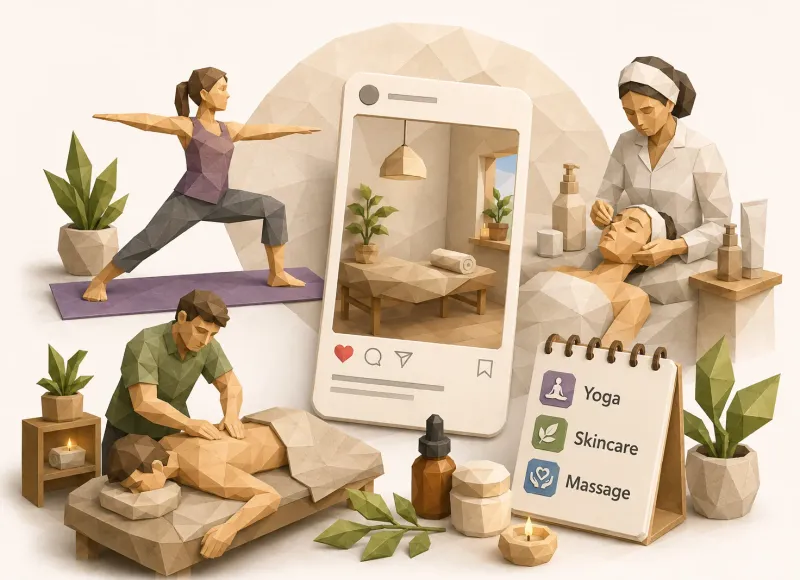

A practical Instagram content plan for yoga teachers, skincare businesses, and massage therapists, with useful ideas that build trust without making medical claims.
If you run a yoga studio, skincare business, or massage practice, Instagram should help people understand what it feels like to choose you.
That is different from making a feed full of vague wellness quotes.
People want to know what you do, who it is for, what the experience is like, and whether they will feel comfortable in your space. Your content can answer those questions without promising outcomes you cannot guarantee or turning every post into a sales pitch.
The useful structure is simple: show the experience, explain the work, and make the next step clear.
Wellness content works best when it makes the experience easier to understand, not when it promises to fix everything.
Seven content types that work across wellness businesses
You do not need seven posts every week. Choose three or four types that fit your business and repeat them with different real examples.
Show the space and the experience
People are often choosing a feeling before they choose a service. Show the room before a class, the treatment space, the products laid out for an appointment, the light at the end of the day, or the small details that make the experience comfortable.
A yoga teacher might show how the room is prepared before class. A skincare practitioner might explain why the treatment room is kept quiet and simple. A massage therapist might show the practical preparation that helps a first-time client know what to expect.
These posts answer a question people may not ask directly: Will I feel at ease here?
Answer one question clients ask repeatedly
The best educational content usually begins as a question you have already answered in person.
- What should I bring to a yoga class?
- How should I prepare for a skincare appointment?
- What should I expect at my first massage?
- Can I attend if I am a complete beginner?
- How much time should I leave afterwards?
One question per post is enough. Avoid turning a caption into a textbook. The goal is to remove one small piece of uncertainty.
Explain your approach
Two businesses may offer similar services and create very different experiences. Explain how you work and what you pay attention to.
A yoga teacher might describe the pace and atmosphere of a class. A skincare business might explain how consultation affects product choices. A massage therapist might talk about how they check comfort and pressure during an appointment.
Be specific about the process. Avoid broad promises about guaranteed transformation.
Share a routine or ritual
Wellness businesses have natural routines: preparing for class, cleaning tools, blending products, resetting the room, writing notes, or closing the studio.
These are useful because they show care without requiring a dramatic story. They also give the account a recognisable rhythm. A quiet preparation post can build more trust than another generic quote about self-care.
Introduce the person behind the work
The person delivering the service is part of the decision. Share why you do the work, what you notice, what you have learned, or what you believe clients deserve from the experience.
This does not require sharing your private life. A professional point of view is enough. Explain why you leave space between appointments, why you do not rush a consultation, or why you keep classes small.
Make availability visible
A wellness business can be welcoming and direct about bookings at the same time.
Mention new class times, appointment availability, a first visit, a seasonal schedule, or how to join a waiting list. Give people the information they need without manufacturing urgency.
A simple sentence is often enough: “There are two spaces in Thursday’s evening class this week. New students are welcome.”
Share a client perspective carefully
A client question, kind message, or description of the experience can help someone decide whether to enquire. Ask permission before sharing anything identifiable, especially when the subject involves health, appearance, or personal circumstances.
Keep the focus on the experience rather than making a result claim. “I finally felt comfortable asking questions” is different from promising that every client will have the same outcome.
Ideas for yoga businesses
Yoga content does not need to perform flexibility or turn every class into a transformation story. Show what makes your teaching accessible and what someone can expect when they arrive.
- A simple class preview: pace, focus, and who it suits
- How you set up the room before students arrive
- A beginner question answered without judgment
- A short explanation of a breathing or movement principle
- What to bring and what not to worry about
- A teacher introduction focused on how you teach
- A quiet post about the atmosphere of a particular class
- Honest availability for the next beginner-friendly session
Avoid implying that one practice will treat or cure a medical condition. Keep the content grounded in your teaching, the class experience, and the practical information a student needs.
Ideas for skincare businesses
Skincare content is strongest when it helps people understand your approach rather than making every post a product claim.
- What happens during a consultation
- How you choose products for a treatment plan
- A close look at the tools or textures used in the studio
- A common routine question answered simply
- How to prepare for an appointment
- Why patch testing, aftercare, or professional boundaries matter
- A product detail explained without promising universal results
- A calm introduction to the space and the person doing the work
Be careful with before-and-after imagery and health-related language. Describe what is visible and what service was provided. Do not imply that a result is guaranteed for every person.
Ideas for massage therapists
Massage content has an extra trust requirement. People need to understand the setting, boundaries, communication, and practical experience before they are comfortable booking.
- What a first appointment involves
- How you check pressure and comfort during a session
- What clients can wear or bring
- How the room is prepared between appointments
- A simple explanation of the types of sessions you offer
- A question you hear from first-time clients
- A quiet view of the space without showing clients
- Current appointment availability and how to enquire
Keep claims modest and accurate. Focus on comfort, communication, relaxation, and your professional process rather than promising to diagnose, treat, or resolve a medical condition.
A simple three-post week
If you are unsure where to start, use this rhythm:
- Experience post: show the space, preparation, or a small part of the service.
- Useful post: answer one question your clients ask.
- Trust post: explain your approach, introduce yourself, or share honest availability.
That mix gives a new visitor enough information to understand the business without requiring daily posting.
The Post Idea Generator can turn a service, client question, or current moment into more specific angles. The Brand Voice Finder helps when your captions are accurate but keep sounding like generic wellness copy.
If the schedule is the part that keeps slipping, the Calm Visibility Routine gives you a small weekly structure rather than another large content plan.
What to do when the business feels too private to post
You do not need to show clients, reveal personal details, or turn every part of the work into content.
Show the parts that are safe and useful to explain:
- how the space works
- what someone should expect
- what questions you answer
- what you care about professionally
- how to take the next step
Boundaries are not a content problem. They are part of a trustworthy business. A clear account can feel personal without being intrusive.
Questions about Instagram for wellness businesses
What should a wellness business post on Instagram?
Start with the experience, the process, and the questions clients ask. Show the space, explain what a first visit involves, answer one practical question, introduce your approach, and mention availability when it is real. The strongest wellness content builds trust through specific details rather than broad promises.
What should a yoga teacher post on Instagram?
Share class previews, beginner guidance, room preparation, teaching principles, what to bring, and the atmosphere students can expect. You do not need to perform advanced poses or promise life-changing outcomes. Make the class easier to understand for the person considering their first visit.
What should a skincare business post on Instagram?
Explain consultations, treatment preparation, product choices, aftercare, routine questions, and the details of your professional approach. Describe visible results accurately and avoid implying that a treatment or product guarantees the same outcome for everyone.
What should a massage therapist post on Instagram?
Focus on the setting, communication, boundaries, first-appointment expectations, session types, preparation, and availability. People often need reassurance about what will happen and how comfort is handled before they enquire.
How often should a wellness business post on Instagram?
Three useful posts a week is a sensible starting point if you can maintain it. A mix of one experience post, one practical answer, and one trust or availability post gives your account variety without requiring daily content. A lower frequency is better than a plan that repeatedly collapses.