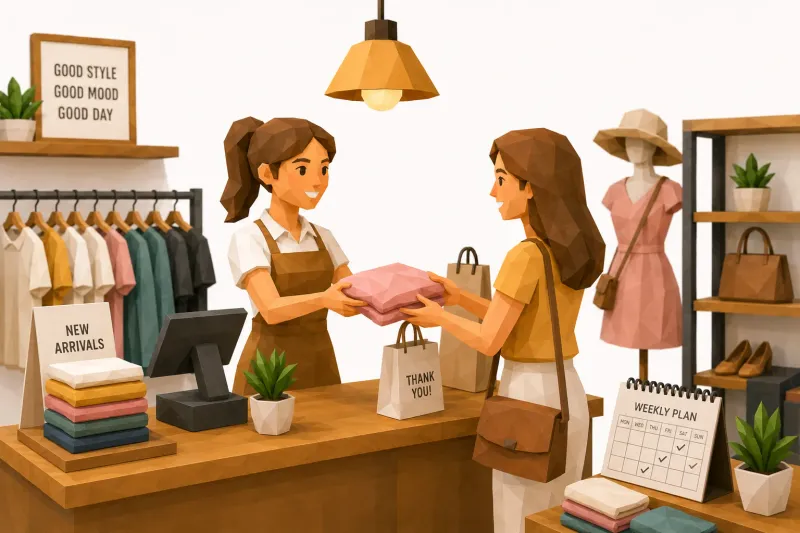

A weekly Instagram plan for boutiques and clothing shops, with post ideas that show the products, the point of view, and how customers can wear them.
If you run a boutique, you have one of the most naturally Instagram-friendly businesses there is.
New arrivals every few weeks. Styling combinations nobody else has thought of. The excitement of a delivery arriving. Customers leaving with something they love. Your eye for what works together — the thing that makes your shop different from every chain on the high street.
And yet most boutique owners get stuck after a few product shots. The “new in” photo. The flat lay. Then nothing for two weeks when buying season hits and there’s no time to think about posting.
That pattern is fixable — and it doesn’t require more time. It requires a smaller set of reliable content types you can return to without starting from blank every time.
A boutique doesn't run out of new stock. It runs out of anything to say about it besides 'new in.'
— A pattern that shows up in most retail accounts
Why boutiques struggle with Instagram (it’s not the products)
Retail is one of the most visual categories on Instagram. You have product shots, styling, seasonal stories, and a strong point of view on what looks good. The problem isn’t a lack of content.
The problem is that most boutique posts are focused entirely on the product — and not on the story or the person behind it.
A photo of a dress on a hanger gives people a product to look at. A photo of the same dress on a real body, styled three different ways, with a caption about why you chose to stock it — gives people a reason to trust you.
7 types of content that actually work for boutiques
Here are seven post types that work well for retail. Pick three that feel right for your week — that’s your plan. You don’t need all seven. You don’t need to post every day.
New arrivals — but with context
The “new in” photo is fine. The “new in with context” is much better.
What arrived? Why did you choose it? What does it work well with from your current stock? Who is it for?
“New arrivals just came in — these linen trousers are the ones I’ve been trying to source for two years. Great for summer, easy to dress up or down. Sizing runs slightly large so I’d go a size down if you’re in between.”
That caption sells the product and proves your expertise at the same time.
Styling combinations
This is the highest-value thing a boutique can post — and the thing that most competitors don’t do.
Take three items from your floor and style them together. Explain the logic. What kind of occasion is this for? What makes this combination work?
You’re not just showing clothes. You’re showing that you know how to wear them. That’s what keeps people coming back to you instead of ordering online.
Behind the buying process
How do you decide what to stock? What do you look for at a trade show? What are the brands you keep returning to, and why?
Most customers have no idea how a boutique works. Showing the buying side of the business makes your curation feel intentional rather than random — and intentional curation is exactly what justifies the premium over fast fashion.
Customer moments
A regular picking up a birthday outfit. A customer who came back to show you she wore it. A note that arrived with an online order.
These posts do two things: they humanise your shop, and they act as social proof. BrightLocal’s research shows 85% of people are more likely to buy from a business after seeing positive reviews — a real customer moment in your content works the same way.
Ask permission and keep it warm. It doesn’t need to be a full story — one photo and one sentence is enough.
Something seasonal or trend-led
What are you seeing come through the door? What’s flying off the rail and what’s sitting? What trend are you stocking this season and why does it work for your customer?
Seasonal content is easy to generate because the season provides the hook. You don’t need to invent a reason to post — the change in weather or the new collection is reason enough.
A soft promotion
You are allowed to tell people what’s available to buy. Keep it natural.
“A few pieces left from the new delivery — these sold fast last time so I won’t reorder. Drop me a DM if you want to reserve something before coming in.”
That’s not pushy. That’s helpful. There’s a difference.
Something personal from you
Why did you open the shop? What drew you to the specific brands you stock? What’s your favourite piece in the shop right now and why?
I know this feels uncomfortable. But people shop at independent boutiques because they want a relationship with the owner — a person with taste who chose these things for them. Your personal perspective is your competitive advantage over every algorithm-driven retailer online.
7 content ideas you can always fall back on
When you’re stuck, rotate these:
- New arrivals with a specific detail or buying reason
- Styling three items together — with the logic explained
- Behind-the-scenes buying, sourcing, or merchandising
- A customer moment (with permission)
- A seasonal or trend-led observation
- What’s just sold out or running low (urgency without pressure)
- Something personal about your taste or your shop’s point of view
You don’t need new ideas every week. Returning to the same types in slightly different ways is the plan.
When you know what to post but not what to write
Once you know what to post, the caption is usually the last thing stopping you from actually doing it. AI tools can genuinely help here — but only if you give them context.
A weak prompt: “write an Instagram caption for a boutique.” A strong one: “I run a small women’s boutique in Bath. I just received a delivery of linen trousers from a French brand I’ve been trying to stock for two years. Tone: warm, knowledgeable, not salesy. Write two short caption options with a soft CTA to DM for availability.”
The second prompt gets you something close to usable. The first gets you something that could belong to any shop.
The Brand Voice Finder helps you put your tone into words in about four minutes — once you have that description, every AI prompt you write from then on gets better.
And if you want a week of post ideas generated for your specific business without having to think them all up yourself, the Post Idea Generator does exactly that.
The thing that actually makes this work
Product shots show what is available. They do not, by themselves, explain why your shop chose it. The boutiques that build an Instagram presence show up consistently and give people a reason to follow beyond the stock list.
Three posts a week, reliably, will outperform a burst of daily posting followed by silence. Later’s analysis of 19M+ Instagram posts found that accounts with steady follower growth average just 2-3 feed posts per week.
If staying consistent is where you keep getting stuck, this guide to staying consistent on Instagram covers exactly why it’s hard and what actually works.
A styled-on-a-body photo with one honest sentence outsells a flat lay with none.
Questions I hear from boutique owners about Instagram
What should a boutique post on Instagram?
The strongest mix for a boutique: new arrivals with buying context, styling combinations, behind-the-scenes buying or merchandising, the occasional soft promotion, and something personal from you. You don’t need all of these every week — three of them, posted consistently, will keep your profile active and your followers engaged.
How often should a boutique or clothing shop post on Instagram?
Three times a week is a sustainable, effective target. What matters most is consistency — showing up on the same days each week, reliably, rather than posting heavily one week and going quiet the next. A steady presence builds the kind of familiarity that turns followers into regular customers.
How do I show new arrivals on Instagram?
Show them with context. Instead of a flat lay with no caption, tell people why you chose this piece, who it’s for, and what it works with. Include sizing notes if relevant. That context is the difference between a post that gets scrolled past and one that gets saved.
Should I post outfit ideas and styling content as a boutique?
Yes — this is some of the highest-value content a boutique can make. Styling content shows your taste, demonstrates how the pieces actually work, and gives people ideas they couldn’t get from a product page alone. It also earns saves (someone saving an outfit idea for later), which is the strongest engagement signal Instagram uses to decide who to show your content to.
How do I get more customers through Instagram as a boutique?
The biggest levers: a clear bio with your location and how to shop, at least one post per week that mentions availability or makes it easy to buy, and consistent enough posting that your profile looks active and current. Instagram rarely drives immediate walk-ins, but a profile full of real styling advice and genuine taste builds the kind of trust that makes people choose your shop when they’re looking for something special.
What hashtags should a boutique use on Instagram?
Use the words your customer would use for the item, style, occasion, and location. The Search Phrase Builder can give you a short starting list, but keep only phrases that genuinely describe the post.
Start here
Pick three content types from the list above that feel natural right now.
Decide which three days you’ll post — and write them in your diary.
For each one: decide what you’re posting first, take the photo, then write one honest sentence about it. That’s your caption.
Do that for two weeks. It’s noticeably easier than staring at a blank screen every time you think about posting.