What Should a Wellness Business Post on Instagram? Yoga, Skincare, and Massage Ideas
A practical Instagram content plan for yoga teachers, skincare businesses, and massage therapists, with useful ideas that build trust without making medical claims.
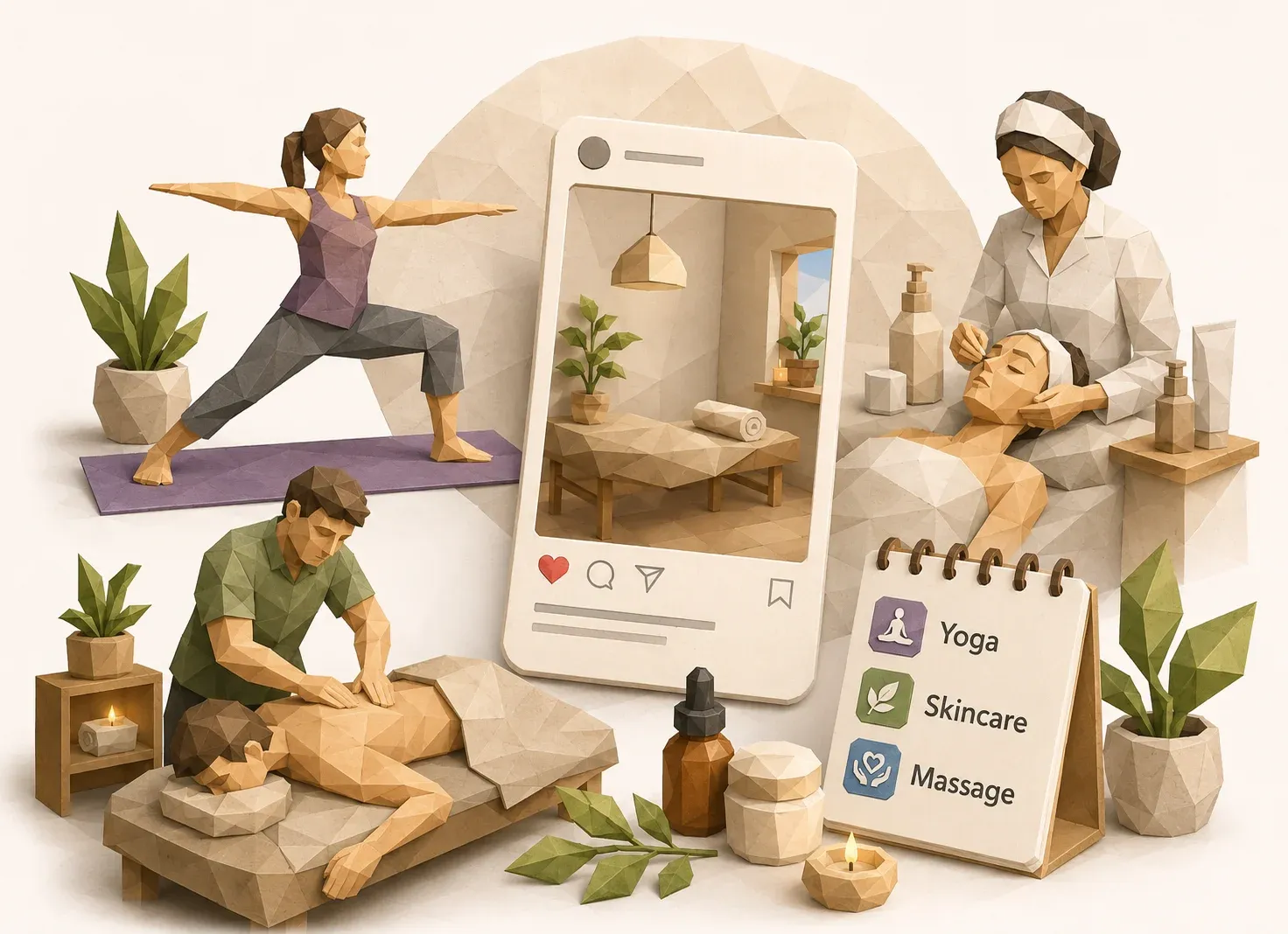
A practical Instagram content plan for yoga teachers, skincare businesses, and massage therapists, with useful ideas that build trust without making medical claims.
· 8 min read
If you run a yoga studio, skincare business, or massage practice, Instagram should help people understand what it feels like to choose you.
That is different from making a feed full of vague wellness quotes.
People want to know what you do, who it is for, what the experience is like, and whether they will feel comfortable in your space. Your content can answer those questions without promising outcomes you cannot guarantee or turning every post into a sales pitch.
The useful structure is simple: show the experience, explain the work, and make the next step clear.
Wellness content works best when it makes the experience easier to understand, not when it promises to fix everything.
You do not need seven posts every week. Choose three or four types that fit your business and repeat them with different real examples.
People are often choosing a feeling before they choose a service. Show the room before a class, the treatment space, the products laid out for an appointment, the light at the end of the day, or the small details that make the experience comfortable.
A yoga teacher might show how the room is prepared before class. A skincare practitioner might explain why the treatment room is kept quiet and simple. A massage therapist might show the practical preparation that helps a first-time client know what to expect.
These posts answer a question people may not ask directly: Will I feel at ease here?
The best educational content usually begins as a question you have already answered in person.
One question per post is enough. Avoid turning a caption into a textbook. The goal is to remove one small piece of uncertainty.
Two businesses may offer similar services and create very different experiences. Explain how you work and what you pay attention to.
A yoga teacher might describe the pace and atmosphere of a class. A skincare business might explain how consultation affects product choices. A massage therapist might talk about how they check comfort and pressure during an appointment.
Be specific about the process. Avoid broad promises about guaranteed transformation.
Wellness businesses have natural routines: preparing for class, cleaning tools, blending products, resetting the room, writing notes, or closing the studio.
These are useful because they show care without requiring a dramatic story. They also give the account a recognisable rhythm. A quiet preparation post can build more trust than another generic quote about self-care.
The person delivering the service is part of the decision. Share why you do the work, what you notice, what you have learned, or what you believe clients deserve from the experience.
This does not require sharing your private life. A professional point of view is enough. Explain why you leave space between appointments, why you do not rush a consultation, or why you keep classes small.
A wellness business can be welcoming and direct about bookings at the same time.
Mention new class times, appointment availability, a first visit, a seasonal schedule, or how to join a waiting list. Give people the information they need without manufacturing urgency.
A simple sentence is often enough: “There are two spaces in Thursday’s evening class this week. New students are welcome.”
A client question, kind message, or description of the experience can help someone decide whether to enquire. Ask permission before sharing anything identifiable, especially when the subject involves health, appearance, or personal circumstances.
Keep the focus on the experience rather than making a result claim. “I finally felt comfortable asking questions” is different from promising that every client will have the same outcome.
Yoga content does not need to perform flexibility or turn every class into a transformation story. Show what makes your teaching accessible and what someone can expect when they arrive.
Avoid implying that one practice will treat or cure a medical condition. Keep the content grounded in your teaching, the class experience, and the practical information a student needs.
Skincare content is strongest when it helps people understand your approach rather than making every post a product claim.
Be careful with before-and-after imagery and health-related language. Describe what is visible and what service was provided. Do not imply that a result is guaranteed for every person.
Massage content has an extra trust requirement. People need to understand the setting, boundaries, communication, and practical experience before they are comfortable booking.
Keep claims modest and accurate. Focus on comfort, communication, relaxation, and your professional process rather than promising to diagnose, treat, or resolve a medical condition.
If you are unsure where to start, use this rhythm:
That mix gives a new visitor enough information to understand the business without requiring daily posting.
The Post Idea Generator can turn a service, client question, or current moment into more specific angles. The Brand Voice Finder helps when your captions are accurate but keep sounding like generic wellness copy.
If the schedule is the part that keeps slipping, the Calm Visibility Routine gives you a small weekly structure rather than another large content plan.
You do not need to show clients, reveal personal details, or turn every part of the work into content.
Show the parts that are safe and useful to explain:
Boundaries are not a content problem. They are part of a trustworthy business. A clear account can feel personal without being intrusive.
Start with the experience, the process, and the questions clients ask.
Show the space, explain what a first visit involves, answer one practical question, introduce your approach, and mention availability when it is real. The strongest wellness content builds trust through specific details rather than broad promises.
Help a new student understand what a class is like before they book.
You do not need to perform advanced poses or promise life-changing outcomes. Make the class easier to understand for someone considering a first visit.
Explain how your services and products fit into a real skincare routine.
Describe results accurately; don’t imply a treatment or product guarantees the same outcome for everyone.
Make it easier for people to understand what happens before, during, and after an appointment.
People often need reassurance about comfort and expectations before they enquire.
Three useful posts a week is a sensible starting point if you can maintain it.
A mix of one experience post, one practical answer, and one trust or availability post gives your account variety without requiring daily content. A lower frequency is better than a plan that repeatedly collapses.
A calmer way
to run social media
Just a few
quick clicks
Calls. Orders. Problems to solve.
You do not have hours for content.
And, honestly, you do not need them.