What a Florist Should Post on Instagram
A weekly Instagram plan for florists, with specific ideas for showing arrangements, occasions, process, and the details that help customers choose.
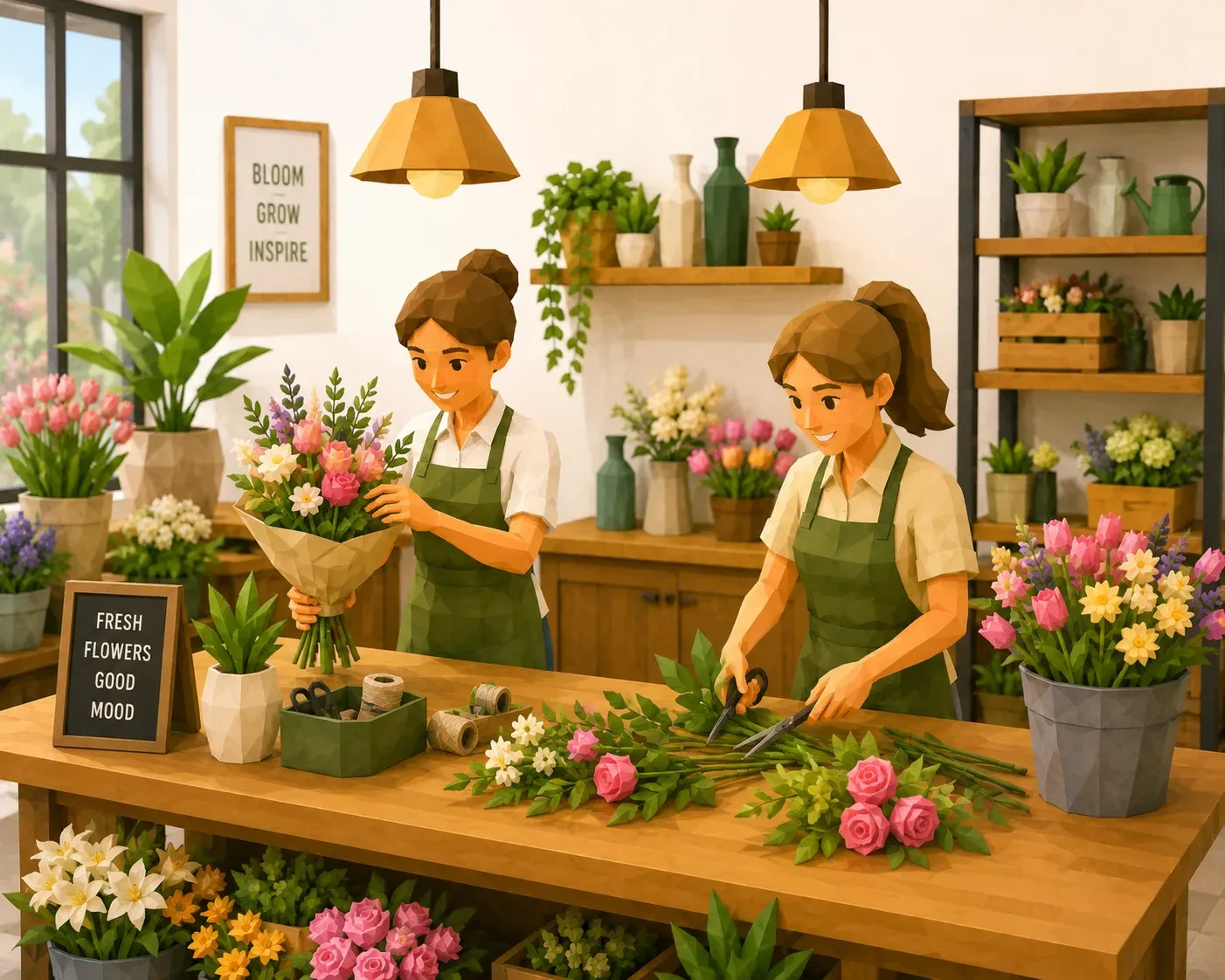
A weekly Instagram plan for florists, with specific ideas for showing arrangements, occasions, process, and the details that help customers choose.
If you’re a florist, your content problem isn’t a content problem. It’s a shelf-life problem.
Stock turns over every few days. Whatever you didn’t photograph on Tuesday is gone by Friday, replaced by something new you also won’t get to in time. That’s a different kind of pressure than most small businesses deal with, and it’s why so many florist accounts post in bursts around Valentine’s or Mother’s Day and go quiet everywhere in between.
So what should actually go up the rest of the year?
A florist's problem is never material. It's that fresh stock arrives faster than a posting habit does.
— A pattern that shows up in almost every florist's feed
Most florists only ever shoot the finished bouquet, which means the entire life of the flower - from delivery box to finished arrangement - never makes it onto the feed. That’s a narrower rotation than it looks like from outside, and it’s why the account goes quiet the moment a slow week hits: there’s really only one type of photo in circulation, and it’s the hardest one to get right.
Without a clear plan, you end up:
The fix isn’t posting more. It’s widening what counts as a post so a slow week still gives you something to show.
Here’s the structure I’d give any florist starting out. Seven days, seven different flavours of content. You don’t have to post all seven - pick the ones that fit your week. But having one idea per day means you’re never starting from blank.
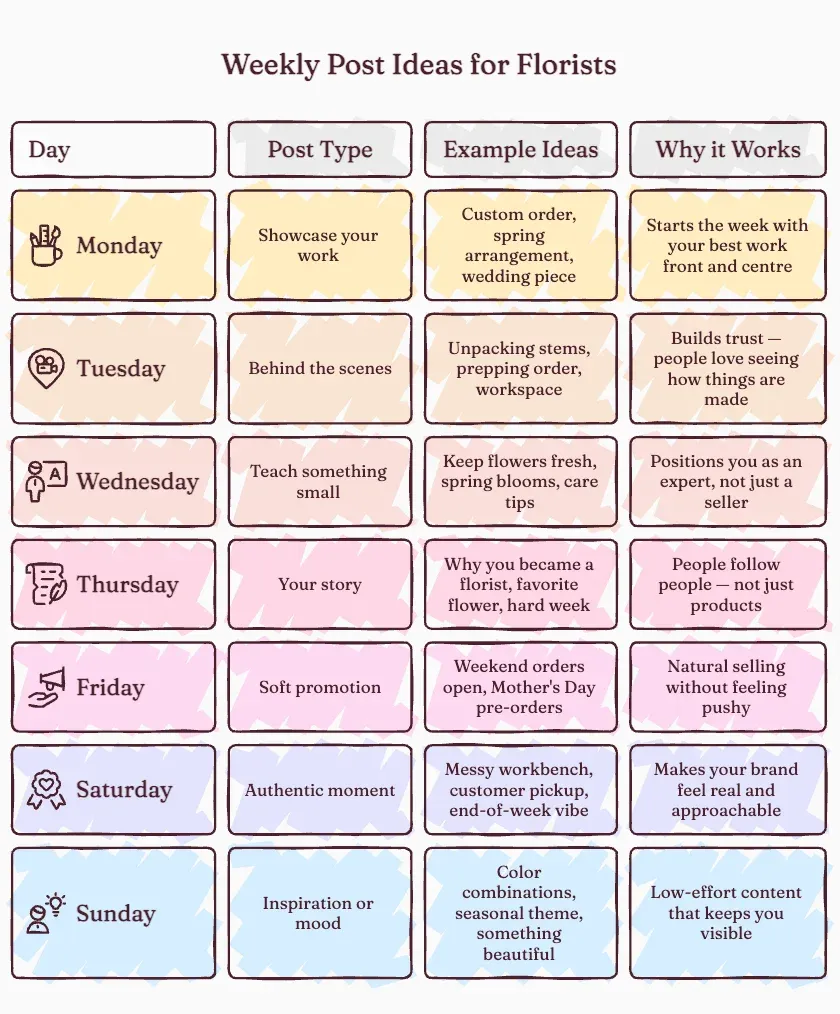
This one is the easiest to start with, and the one most florists are already doing. A finished bouquet, an arrangement, a recent custom order.
My advice: stop waiting for the perfect shot. Post the good one, not the imaginary perfect one. Your work is already beautiful.
Caption ideas:
This is the post type most florists skip - and the one I most want them to do more of.
Show the stems being arranged. The bucket of flowers before they become a bouquet. The prep before the pickup. Imperfection is allowed here. Imperfection is actually better.
You know things your customers don’t. How to keep tulips upright. Which flowers last longest in spring. What flowers suit a minimalist home.
One small tip once a week positions you as someone worth following - not just buying from.
Why did you become a florist? What’s your favourite flower to work with and why? What was the hardest order you ever did?
I know this one feels uncomfortable. But people connect to people. Your story is part of what makes your shop different.
You’re allowed to tell people what you’re selling. Keep it natural - not a billboard, just a mention. “Weekend orders are open. DM me to reserve.” That’s it.
The messy workbench. A customer coming to collect. A quiet moment in the shop. These posts feel authentic because they are authentic. And that’s exactly what makes them work.
Colour palettes. Seasonal inspiration. Something that made you stop and look. This is the easiest post of the week - low effort, still keeps you showing up.
When you’re stuck, rotate these. They work every week, in any season:
Number six deserves more weight than it gets. A wedding order is the highest-trust purchase most florists sell, and the client’s own reaction to it - a photo of the arrangement at the venue, a thank-you message - carries more weight than anything you could stage yourself. BrightLocal’s 2026 consumer research found 85% of people are more likely to use a business after reading positive reviews, and 24% go on to check its social media. A real customer photo isn’t filler content. It’s the proof a new customer is looking for.
You don’t need new ideas every week. Reusing these formats in slightly different ways is the strategy.
Good photos help people notice a florist. A reliable rhythm gives them repeated chances to remember and contact one. The florists who do well are not necessarily the ones with the best photos or most followers; they are the ones who keep showing up.
Consistency signals to your audience - and to Instagram’s algorithm - that you’re active, reliable, and worth paying attention to.
A steady 3-posts-a-week rhythm will outperform a burst of 14 posts in one week followed by silence. Later’s analysis of 19M+ Instagram posts showed that accounts with steady follower growth average just 2-3 feed posts per week - not daily, not in bursts. And Instagram’s algorithm rewards accounts that earn consistent early engagement rather than one-off spikes, which means showing up regularly beats showing up intensely.
The bouquet you photograph today is worth more than the perfect shot you keep meaning to set up next week.
No - and I'd actually argue that trying to post every day is what causes most florists to burn out and go quiet.
Three times a week is plenty to stay visible and build an audience. The goal is a rhythm you can sustain through a busy week, not just a quiet one.
Natural light and a clean or interesting background will take you most of the way there.
I’ve seen florists with a basic smartphone camera outperform accounts with studio-quality shots - because the content felt real. Your customers aren’t looking for magazine photography. They’re looking for someone they trust.
Both work, but for most florists starting out, I'd say don't let the pressure of making Reels stop you from posting at all.
A simple photo with a short caption beats no post. Once you’re comfortable with a rhythm, add short phone videos - even 10 seconds of you arranging flowers can perform well.
Tell people what's in the photo and add one honest detail.
That’s it. “Today’s order - a mixed spring bouquet for a birthday. These ranunculus were particularly good this week.” Simple, specific, and human. That’s all you need.
Location tags and relevant hashtags help, but the biggest factor is consistency.
The more regularly you post, the more Instagram shows your content to your existing followers - which is the audience that actually buys from you. Focus on that first before chasing reach.
Start with a two-week test:
Do that for two weeks and compare the effort with starting from scratch each time.
And if you want to take the planning off your plate entirely, Story Inventory can build your weekly post ideas for you - written in your voice, for your type of business. So you’re never staring at a blank screen wondering what to say.
For ideas matched to the time and material you have this week, use the Post Idea Generator.
A calmer way
to run social media
Just a few
quick clicks
Calls. Orders. Problems to solve.
You do not have hours for content.
And, honestly, you do not need them.